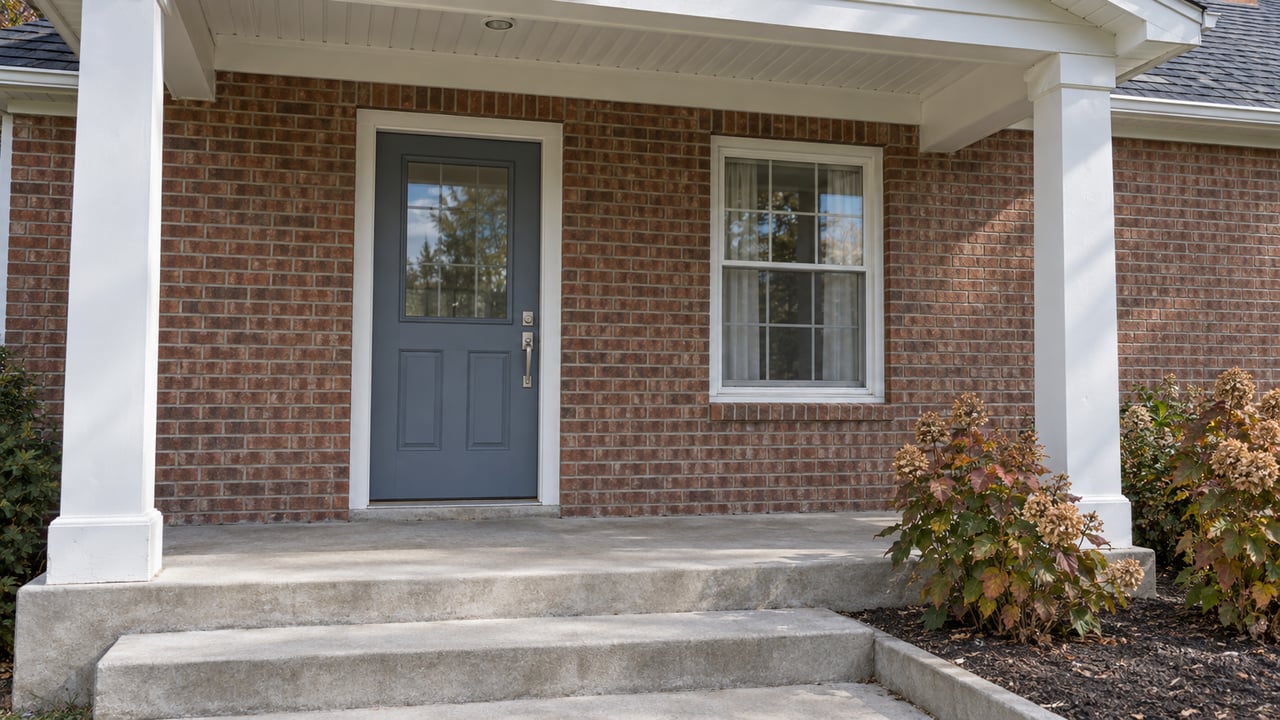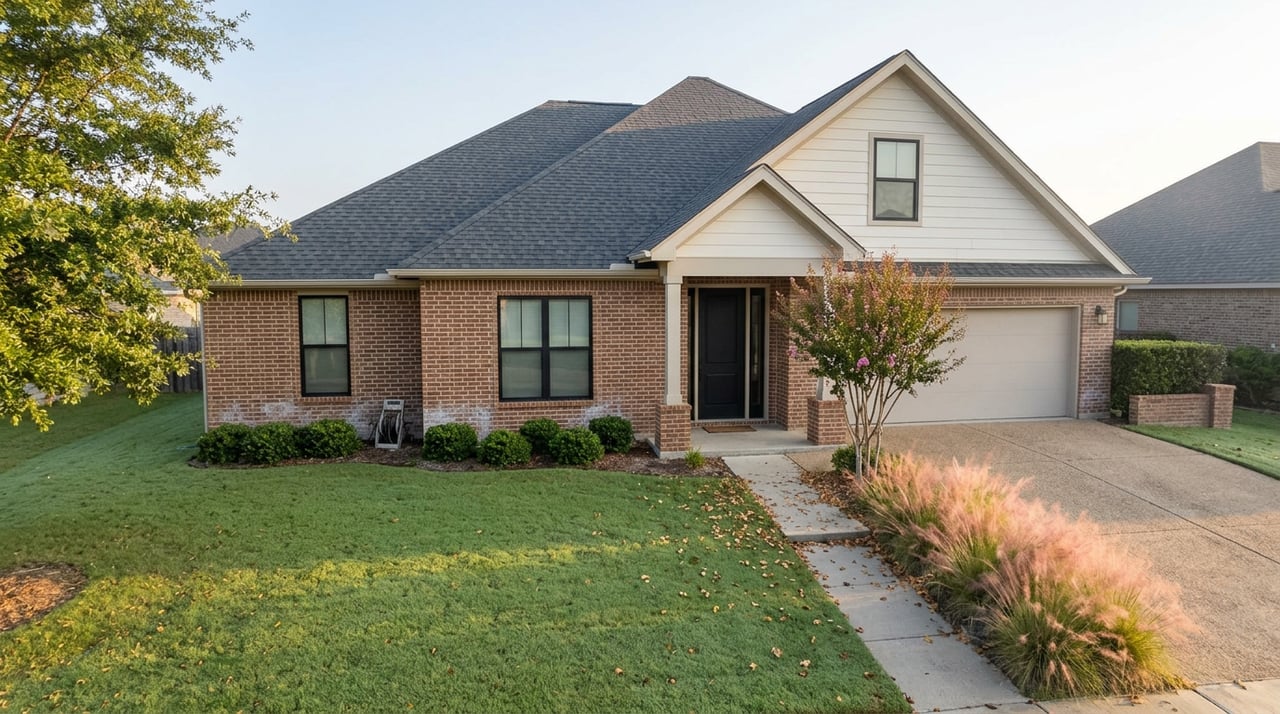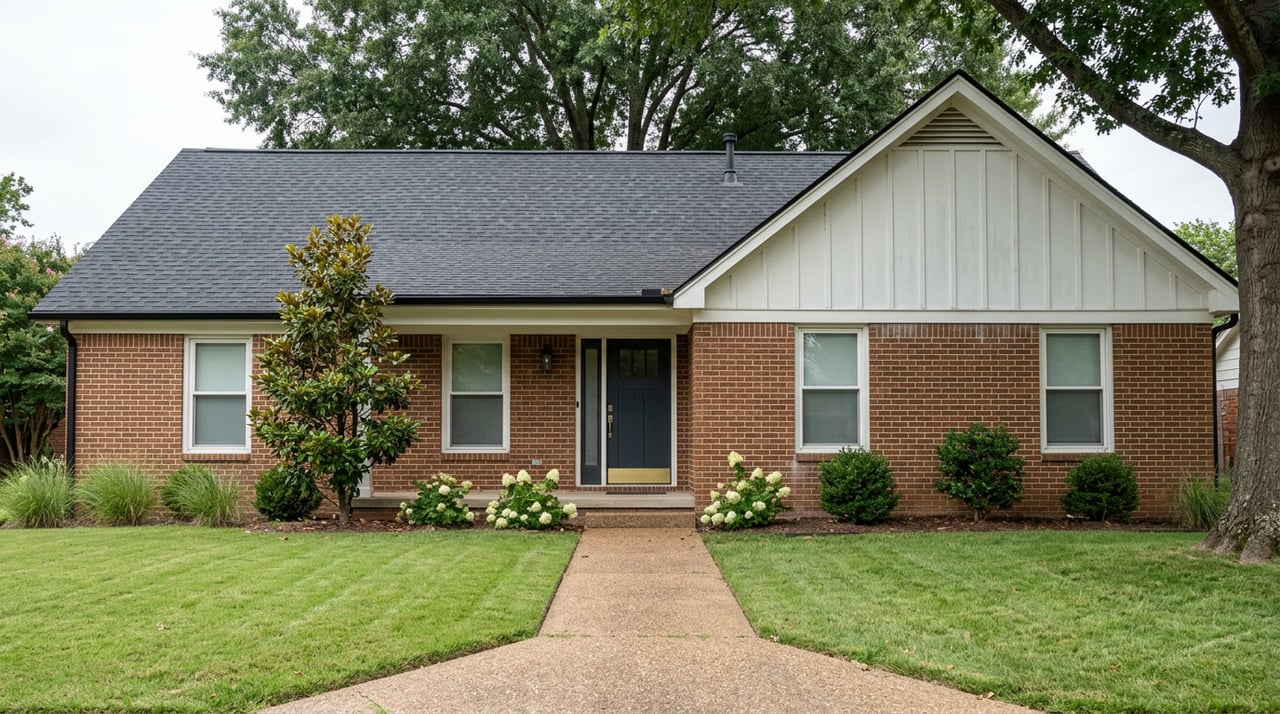
Pull up two homes both labeled Sango, Clarksville, TN 37043. One sits on Old Sango Road, no HOA, county taxes only, priced in the mid-$200,000s with a detached garage and a half-acre of trees. The other is three miles away in Whitewood Farm, farmhouse trim, an HOA newsletter waiting in the mailbox, and a price tag north of $700,000. Same neighborhood name. Same ZIP code. Almost nothing else in common.
This is the part every median-price headline skips. When a portal tells you Sango's homes are listing around $425,000, that number is not describing one market. It is averaging two of them together, and the gap between those two markets is wide enough to swallow a down payment whole.
What "Sango" Actually Contains
Sango is not a single subdivision. It is an unincorporated stretch of southeastern Montgomery County that has absorbed a dozen different developments over the past two decades, plus the original farm-and-acreage corridor that predates all of them. If you spend an afternoon searching "homes for sale in Sango," you will run into names like these:
- Sango Mills and the Reserve at Sango Mills, off Sango Road
- Sango Crossing and Sango Commons, both accessed from Highway 41A
- Whitewood Farm, in the Rossview school cluster
- Fawn Meadows, a smaller pocket of larger cul-de-sac lots
- The original Old Sango Road and Sango Road corridor, where lot sizes run from a half acre to nine acres and beyond
Each of those is a distinct product. A buyer comparing "Sango" prices without knowing which of these they are actually looking at is comparing apples to a farmhouse.
The Two-Tier Market, By The Numbers
Here is what that split looks like when you pull the actual listing data instead of the neighborhood-wide average.
| Sango submarket | Typical price range | Price per square foot | HOA | Lot character |
|---|---|---|---|---|
| Old Sango Road corridor (established resale) | Low $250,000s up to $1 million-plus for larger acreage estates | Varies widely by age and lot size | No HOA, county taxes only on most listings | Half acre to 9-plus acres, mature trees, older builds |
| Sango Mills / Reserve at Sango Mills | Median list price around $425,000 as of early September 2026 | About $206 | Yes | Standard subdivision lots |
| Sango Crossing | Average list price near $615,000 in early 2026 | About $162 | Yes | Larger new-construction lots, homes averaging roughly 3,800+ square feet |
| Whitewood Farm | Recent listings and pending sales between $700,000 and $802,000, as of early September 2026 | Not separately reported | Yes | Larger new-construction, modern farmhouse styling |
A resale on Old Sango Road sold for $1.6 million in July 2025, on 8.7 private acres across from the Eastland Green golf course. That sale sits in the same "Sango" bucket as a $254,000 starter home a few miles down the same road. The median smooths both into one number that describes neither.
The Number That Runs Backward
Here is the part that surprises people who assume price and price-per-square-foot move together. They do not, and Sango is a clean example of why.
Sango Crossing, the pricier of the two subdivisions in the table above, actually runs cheaper per square foot than Sango Mills. Sango Crossing's average list price near $615,000 works out to about $162 per square foot. Sango Mills, listing for less overall at a median around $425,000, comes in at roughly $206 per square foot.
That is not a typo, and it is not Sango Crossing being a better deal. It is a house-size effect. Sango Crossing's homes are simply larger, averaging close to 3,800 square feet, so the higher price is buying more square footage rather than a higher rate per foot. Sango Mills homes tend to run smaller, so the same construction and finish costs get spread across less space, pushing the per-foot number up even though the total price is lower.
The lesson for a buyer comparing subdivisions is not "which one is more expensive." It is "which one is charging more for the same square foot of house." Those are different questions, and only one of them tells you what you are actually paying for space, storage, and bedrooms.
The HOA Line Buyers Skip Past
The other place the two-tier market shows up is in the fine print, not the headline price. Most of the newer platted subdivisions, Sango Mills, Sango Crossing, Whitewood Farm, and Sango Commons among them, carry an organized HOA. The older Sango Road and Old Sango Road corridor overwhelmingly does not. Listing after listing along that corridor advertises "no HOA" and "county taxes only" as a selling point.
That difference is not just a lifestyle preference between lawn-care service and mowing your own half acre. It is a real monthly number. An HOA dues line does not show up in the list price you are comparing across neighborhoods, but it shows up in your closing disclosure and every month after that. A buyer who budgets off the sale price alone and skips the HOA line is comparing two homes that look similar on paper but carry different true monthly costs once dues are added in.
If you are cross-shopping a $425,000 home in a subdivision against a $400,000 acreage resale on Old Sango Road, the sticker prices look close. The actual cost of owning each one for a year might not be.
What This Means When You're Actually Searching
Translate all of this into a search strategy and it gets simple fast.
If you are seeing Sango listings priced under $300,000, you are very likely looking at the older corridor: no HOA, county taxes only, a lot with some age and some trees, and a home that may need updating in exchange for acreage and lower carrying costs.
If you are seeing Sango listings at $600,000 and above, you are almost certainly in one of the newer platted subdivisions, Sango Crossing or Whitewood Farm, buying new or newer construction, larger square footage, and an HOA that comes with it.
The messy middle, roughly $400,000 to $500,000, is where both markets overlap and where a buyer has to actually ask which product they are looking at rather than assume. That is exactly the price band where Sango Mills sits, and it is exactly the band where a quick glance at price alone will not tell you whether you are getting a subdivision starter home with dues or an unrestricted acreage lot without them.
For anyone budgeting off a BAH allotment, a PCS timeline, or a move-up sale, that distinction changes the math. A $425,000 subdivision home with HOA dues and a $425,000 acreage resale without them are not the same monthly payment, even at an identical sale price.
A Few Questions Worth Asking Before You Tour
Is Sango part of the city of Clarksville, or a separate town? Sango is unincorporated Montgomery County, not a chartered city. That is part of why county taxes only, and no city tax line, shows up so often on the Old Sango Road corridor listings, while some of the newer subdivisions closer to city services may carry different arrangements.
Do all the Sango subdivisions have an HOA? No. The pattern in the research is consistent: newer platted developments like Sango Mills, Sango Crossing, Sango Commons, and Whitewood Farm tend to have one. The older acreage corridor along Sango Road and Old Sango Road generally does not.
Why do prices vary so much within what looks like one neighborhood? Because "Sango" is really shorthand for a decades-long build-out, not one development. A 2010 subdivision starter home, a 2024 farmhouse-style new build, and a 1990s home on nine private acres all get filed under the same neighborhood name, even though they are three different products with three different cost structures.
If you are trying to figure out which slice of Sango actually fits your budget and your priorities, that is not a question a portal median can answer for you. It takes someone who can walk the actual price-per-square-foot math and the actual HOA line against your specific numbers. That is exactly the conversation Make Clarksville Home has with buyers and sellers across this market every week. Schedule a free consultation and we'll help you figure out which Sango you're really shopping for.